 skora
skora
What makes Skora different
Skora doesn't just score products. It watches your whole shelf — that's the part most apps miss.
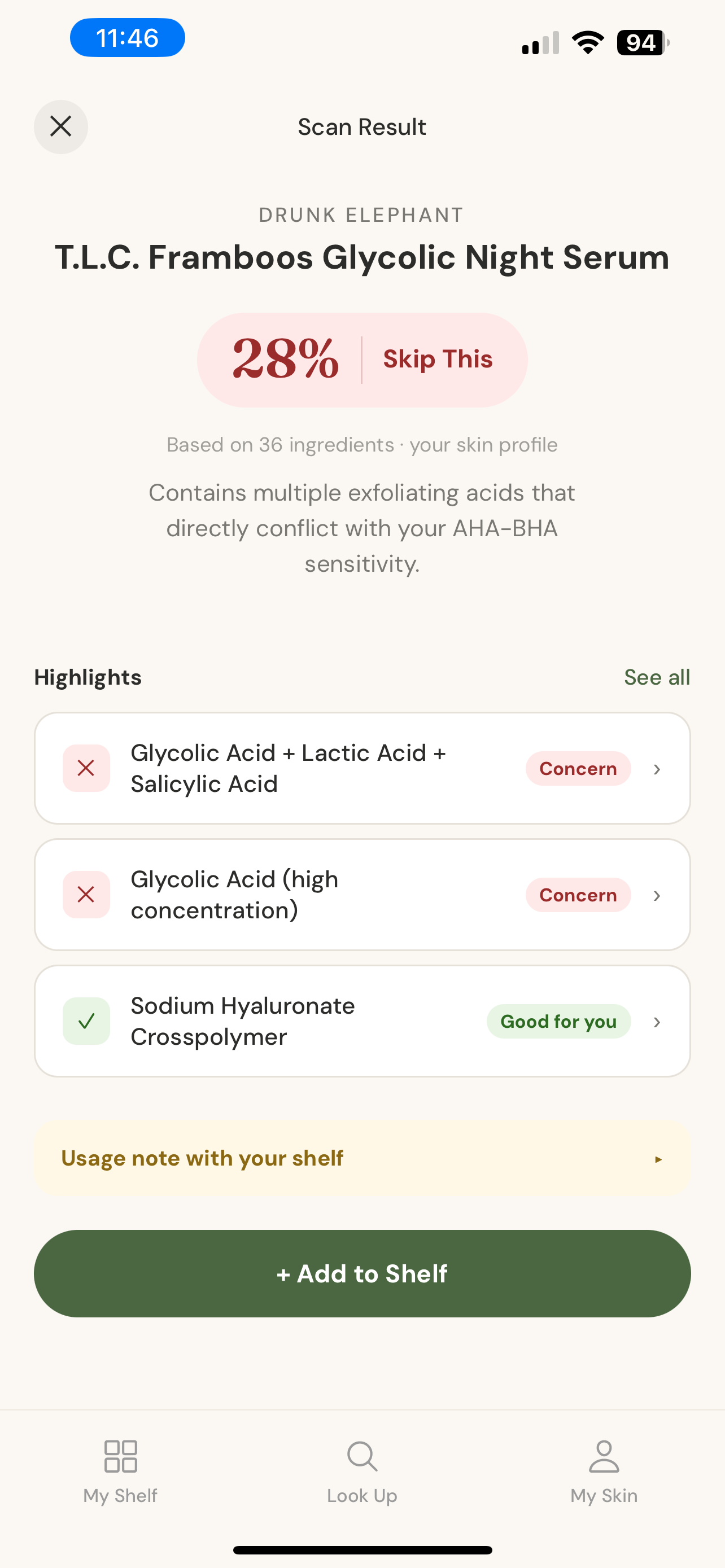
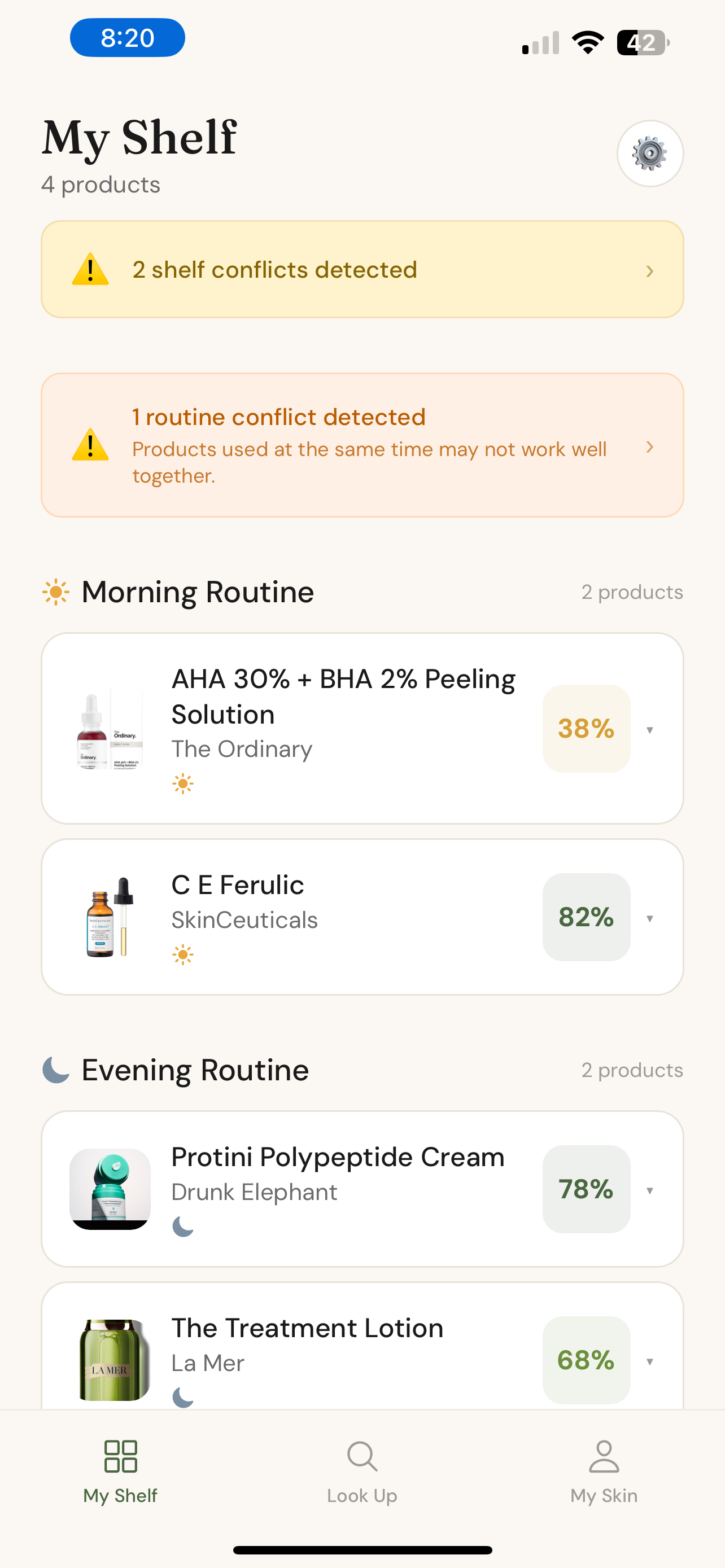
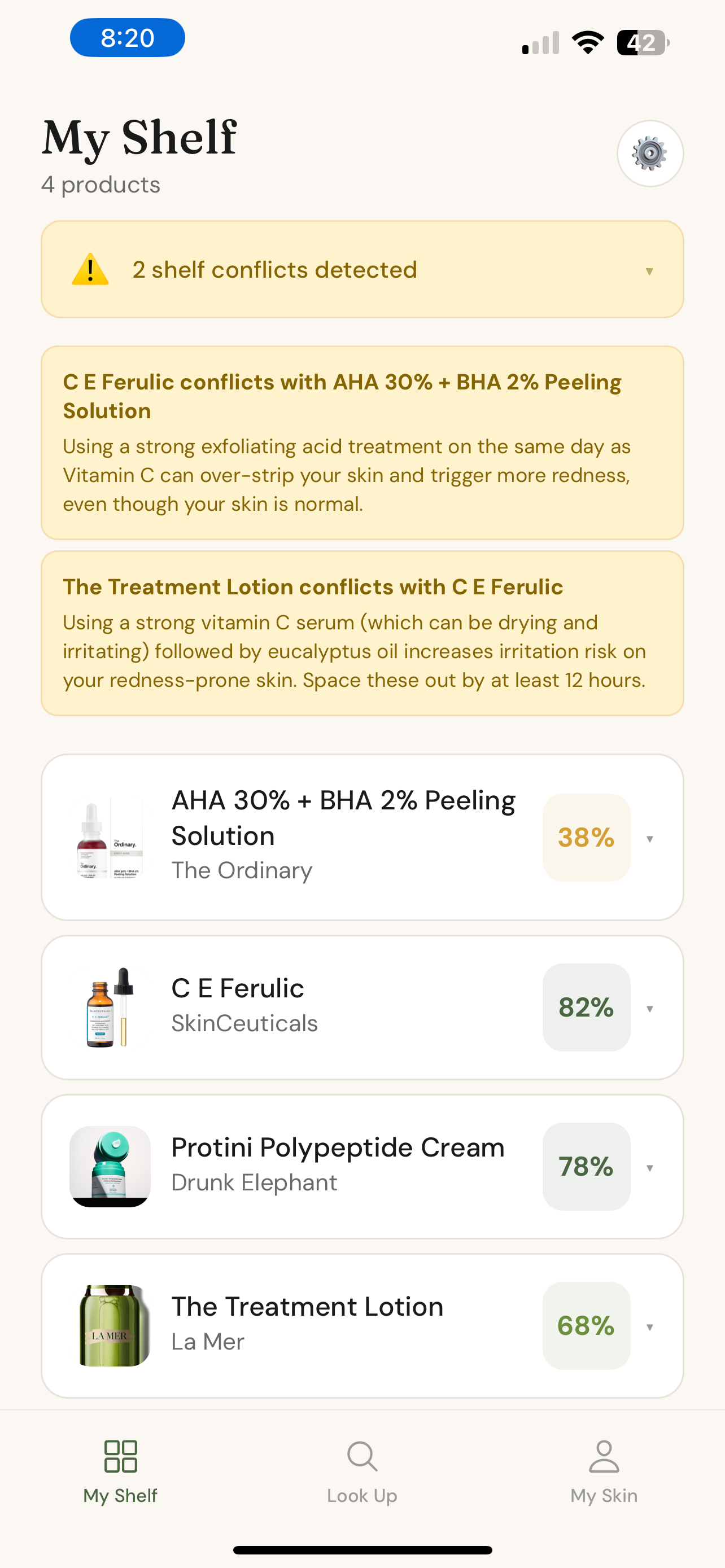
Skora is a personalized skincare ingredient scanner. Every product gets a match score built for your skin — not skin in general. And Skora watches your shelf, warning you when products clash.
★★★★★ 5.0 on the App Store · Free · iOS 15.1+
How it works
Skora is built to give you a real answer in seconds — not a generic safety score.
Set your skin type, sensitivities, and concerns once. Update any time. Skora uses this profile to personalize every score.
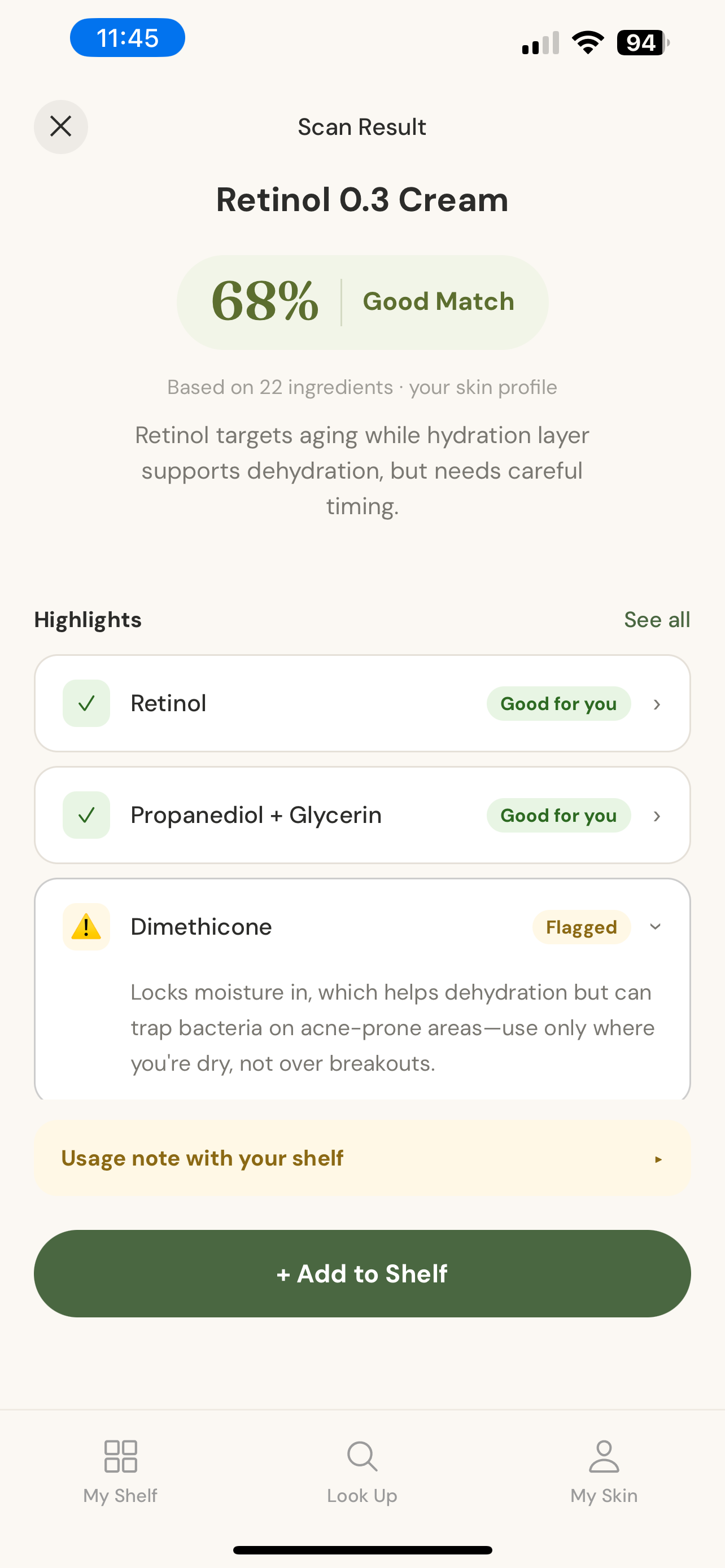
Search by name, scan a barcode, or photograph the ingredient list. Skora reads every component and matches it against your profile.
Get a 0–100 match score, a plain-English breakdown of every ingredient, and a usage note explaining when to use it or skip it.
What makes Skora different
Why Skora
Four things that make Skora's verdict actually mean something for you.
The same product can score 82 for oily-acne-prone skin and 41 for dry-sensitive skin. The verdict is yours, not a generic safety number.
Skora separately flags when products you already own clash — like vitamin C stacked with chemical exfoliants, or strong acids near retinol.
No vibes. Each verdict — good for you, use with caution, or skip — is backed by a published source you can read yourself.
"Can clog your pores" beats "comedogenic." "Pulls moisture into your skin" beats "humectant." Every callout references your specific profile.
Compare
A factual comparison of the four most-used ingredient checkers for skincare. Verified against each tool's public methodology.
| Skora | Yuka | Think Dirty | INCIDecoder | |
|---|---|---|---|---|
| Score changes based on your skin profile | Yes | No — same score for all users | No — universal 0–10 hazard scale | No — encyclopedic, not personalized |
| Detects conflicts between products on your shelf | Yes | No | No | No |
| Weighs ingredients by concentration (INCI position) | Yes | No | No | Shows position, no weighting |
| Gives a verdict per ingredient | Use / caution / skip | Hazard score only | 0–10 hazard score | Lists what it does, no verdict |
| Skincare-focused | Yes | No — also food & broader cosmetics | No — broader cosmetics | Yes |
| Free tier | Unlimited scans | Free | Free | Free (web-based) |
Reviews
Skora launched in late April. These are the moments early users wrote in about.
"Skora saved me $135 — it told me a $12 drugstore product matched my skin better than the luxury serum I almost bought."
— App Store review"Turns out my vitamin C serum and my exfoliant were basically fighting each other. I had no idea."
— App Store review"Finally, an ingredient app in plain English instead of a chemistry class."
— App Store reviewFAQ
If you're comparing Skora to other ingredient apps, start here.
Skora is an iOS app that scans skincare products and gives each one a personalized match score based on your skin type, sensitivities, and concerns. Separately, Skora watches your shelf and warns when products you own conflict with each other. Every ingredient is explained in plain English, with cited sources.
No. The match score is purely a product-vs-your-skin score — it does not change based on what else is on your shelf. Shelf conflicts are a separate layer: Skora shows them as warnings on your shelf and inside scan results, but they do not lower the product's own match score.
Yuka rates products on a universal scale — every user sees the same score for the same product. Yuka does offer skin-type filters for browsing, but the score itself doesn't change based on who's using it. Skora is different: your skin profile changes the score itself. The same product can be a "great match" for one user and a "poor match" for another. Skora also detects conflicts between products on your shelf, which Yuka does not.
Think Dirty rates products on a 0–10 hazard scale based largely on the EWG database — the same score for every user. INCIDecoder lists what each ingredient does, like an encyclopedia, without telling you whether you should use it. Skora gives a personalized verdict per ingredient (good for you, use with caution, or skip) based on your skin profile, and weighs ingredients by their INCI position so high-concentration actives carry more weight.
Skora actually uses AI under the hood — but with a few things general AI can't easily replicate, even with custom instructions or memory turned on.
Calibrated scoring. Ask a general AI to rate the same product twice and you'll usually get two different answers, both landing in the safe middle (65–75 out of 100) — because AI without a rubric converges on the mean. Skora's scoring runs against a fixed five-tier rubric anchored to calibrated reference cases. The same product against the same skin profile always returns the same verdict — and the verdicts actually discriminate. A great-for-your-skin moisturizer hits 90+, not 72.
Structured shelf, watched actively. You can tell a general AI your skin type once and it'll remember. Maintaining a current list of every product you actually use, with full ingredient lists, across long conversations — that's brittle. Skora stores your shelf as real structured data and automatically checks every new scan against it. You get a conflict warning when you scan, not when you remember to ask.
Grounded in sources. Every Skora verdict ties back to a cited source. General AI will sometimes hallucinate an ingredient or invent a concern.
Built for a fast loop. Skora turns "is this product right for me?" into one workflow — point your camera at the ingredient list and get a structured answer with a score, ingredient breakdown, and any shelf-conflict warnings. The general-AI version is multi-step every time: photograph, wait, re-prompt for the format you want, read paragraphs of caveats.
Skora evaluates each ingredient against your skin type, sensitivities, and concerns, then weighs it by its INCI list position (a proxy for concentration). The product's match score is a weighted average across all judged ingredients. Every judgment is backed by a cited source.
A shelf conflict happens when two products you own have ingredients that cancel each other out, increase irritation, or destabilize each other when used together. Common examples: vitamin C with chemical exfoliants, retinol stacked with benzoyl peroxide, or strong acids layered with high-percentage niacinamide. Skora flags these on your shelf with plain-English explanations.
Yes. The free tier includes unlimited scans and up to 3 products on your shelf. Full Access is $29.99/year (with a 3-day free trial — about $2.50/month) and unlocks an unlimited shelf, full ingredient breakdowns, the routine builder, and product recommendations.
No. Skora is built only for skincare — moisturizers, serums, cleansers, toners, sunscreens, masks, and treatments. Haircare, makeup, and fragrance use different ingredient logic and are not supported.
Not yet. Skora is currently iOS-only and requires iOS 15.1 or later. Android is on the roadmap.
Skora supports oily, dry, combination, sensitive, and normal skin, and concerns including acne, redness, anti-aging, dark spots, dehydration, and large pores. You set your profile once during onboarding and can update it any time in Settings.
Yes. Skora does not sell user data. Your skin profile and shelf are tied to your account and used only to generate your match scores and conflict warnings.
Free unlimited scans. Three products on your shelf, free. iOS 15.1 or later.
Download Skora →